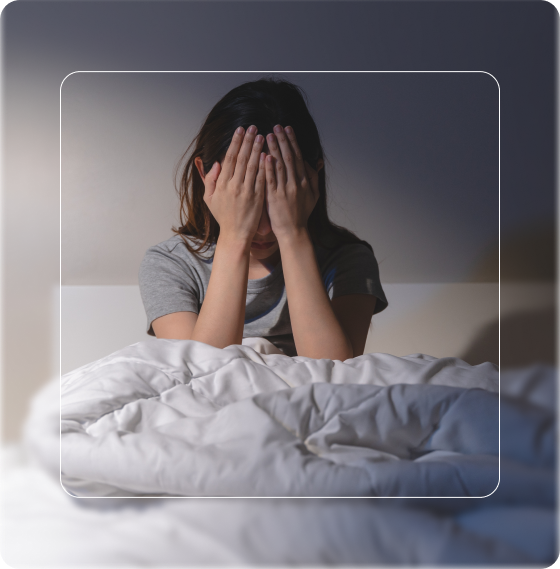
Serious Sleep Disorders and Mental Health: A Psychiatric Framework Beyond Insomnia

Serious Sleep Disorders and Mental Health: A Psychiatric Framework Beyond Insomnia

Sleep is not a passive state — it is one of the brain’s primary regulatory systems.

In psychiatry, disrupted sleep is not merely a symptom. It is often:

  • A driver of mood instability
  • A trigger for relapse
  • A predictor of severity
  • A barrier to recovery

While insomnia is common and well-covered, many people experience sleep disorders that are missed, misdiagnosed, or incorrectly treated as anxiety or depression.

At Dr. Lewis’s practice, sleep is approached as a core biological system, deeply intertwined with:

  • Mood regulation
  • Attention and executive function
  • Psychosis risk
  • Metabolic health
  • Circadian stability

This page serves as the authoritative hub for serious sleep disorders that affect mental health — beyond insomnia alone.

sleep disorder ()

Why Sleep Disorders Matter So Much in Psychiatry

Sleep disruption affects:

  • Neurotransmitter balance
  • Stress hormone regulation
  • Emotional reactivity
  • Cognitive flexibility
  • Brain energy metabolism

Chronic sleep disorders are associated with:

  • Treatment-resistant depression
  • Bipolar relapse
  • Worsening ADHD symptoms
  • Increased anxiety and panic
  • Higher suicide risk

This is why sleep disorders must be actively assessed, not assumed to resolve once mood improves.

Insomnia vs Sleep Disorders: A Critical Distinction

Insomnia refers to:

  • Difficulty falling asleep
  • Difficulty staying asleep
  • Non-restorative sleep

But many patients with “insomnia” actually have:

  • Sleep apnea
  • Circadian rhythm disorders
  • Medication-induced sleep disruption
  • Neurodevelopmental sleep differences

Treating these as insomnia alone leads to partial or failed treatment.

sleep disorder ()

Sleep Apnea and Mental Health

Sleep apnea is one of the most underdiagnosed contributors to psychiatric symptoms.

It is strongly associated with:

  • Depression
  • Anxiety
  • ADHD-like symptoms
  • Cognitive impairment
  • Emotional dysregulation

Key signs include:

  • Loud snoring
  • Unrefreshing sleep
  • Morning headaches
  • Daytime fatigue
  • Worsening mood despite adequate sleep duration

Sleep apnea fragments sleep architecture, reducing:

  • REM sleep
  • Deep sleep
  • Oxygen delivery to the brain

Treating Sleep Apnea Improves Psychiatric Outcomes

Effective treatment may include:

  • CPAP or oral appliances
  • Weight-neutral airway support
  • Sleep position strategies
  • Coordination with sleep medicine

Treating sleep apnea can:

  • Improve depression response
  • Reduce anxiety
  • Enhance cognitive clarity
  • Improve medication effectiveness

Ignoring it can undermine every other psychiatric intervention.

sleep disorder ()
sleep disorder ()

Circadian Rhythm Disorders: When Timing Is the Problem

Circadian rhythm disorders occur when the brain’s internal clock is misaligned with the external world.

Common types include:

  • Delayed sleep–wake phase disorder
  • Advanced sleep–wake phase disorder
  • Shift work disorder
  • Irregular sleep–wake rhythm

Symptoms often include:

  • Inability to fall asleep at conventional times
  • Difficulty waking despite adequate sleep
  • “Night owl” patterns mistaken for insomnia or laziness

Circadian Disruption and Mood Disorders

Circadian instability is especially important in:

  • Bipolar disorder
  • Recurrent depression
  • Seasonal mood patterns

Circadian misalignment can:

  • Precipitate manic or hypomanic episodes
  • Worsen depressive episodes
  • Increase relapse risk

Sleep and Bipolar Disorder: A High-Risk Intersection

In bipolar disorder:

  • Sleep loss is not just a symptom — it is a trigger
  • Even small disruptions can destabilize mood
  • Irregular schedules increase relapse risk

Effective bipolar care prioritizes:

  • Regular sleep–wake timing
  • Light exposure management
  • Medication timing
  • Travel and schedule planning

sleep disorder ()

ADHD and Sleep Architecture

People with ADHD often have fundamentally different sleep architecture, including:

  • Delayed circadian phase
  • Reduced sleep efficiency
  • Fragmented REM sleep
  • Increased nighttime arousal

Sleep problems in ADHD may present as:

  • Difficulty falling asleep
  • Racing thoughts at night
  • Morning grogginess
  • Paradoxical alertness at night

Medication Effects on Sleep

Psychiatric medications can:

  • Improve sleep indirectly by stabilizing mood
  • Disrupt sleep architecture
  • Alter REM patterns
  • Cause daytime sedation or nighttime activation

Classes with notable sleep effects include:

  • SSRIs and SNRIs
  • Stimulants
  • Antipsychotics
  • Mood stabilizers

sleep disorder ()

Sleep, Metabolism, and Brain Energy

Sleep is essential for:

  • Glucose regulation
  • Insulin sensitivity
  • Appetite hormones
  • Mitochondrial repair

Poor sleep increases:

  • Anxiety
  • Depression
  • Impulsivity
  • Cravings

Trauma, Hyperarousal, and Sleep

Trauma-related sleep disruption often involves:

  • Hypervigilance
  • Nightmares
  • Fragmented sleep
  • Fear of sleep itself

Treating trauma-related sleep issues requires:

  • Nervous system regulation
  • Safety-oriented therapy
  • Careful medication use

sleep disorder ()

What Integrative Psychiatry Does Not Do With Sleep

Integrative psychiatry:

  • Does not reduce sleep to supplements
  • Does not treat apnea as anxiety
  • Does not ignore circadian biology
  • Does not use sedatives as a default

Sleep disorders require diagnostic clarity, not trial-and-error sedation.

Sleep Disorder Care at Dr. Lewis’s Practice

Care may include:

  • Psychiatric evaluation
  • Sleep disorder screening
  • Medication review and optimization
  • Circadian stabilization strategies
  • Coordination with sleep medicine

sleep disorder ()
sleep disorder ()

Final Takeaway

Sleep is one of psychiatry’s most powerful — and most underused — treatment levers.

When sleep disorders are:

  • Correctly identified
  • Properly treated
  • Integrated into psychiatric care

patients often experience improvements that no medication alone could achieve.

This page anchors a model of care that treats sleep not as an afterthought, but as a core pillar of mental health.

ADHD is not a failure of focus—it’s a signal.

A signal that the brain’s regulatory systems need better support.

By integrating neuroscience, metabolism, nutrition, gut health, and compassionate psychiatric care, ADHD treatment can move beyond coping toward real capacity.