

Is Social Media Making You Anxious? Here’s What the Research Says

Imagine this: You’re winding down after a long day. You check your phone for a few minutes… and suddenly, it’s been an hour. You’re scrolling through photos of vacations you can’t take right now, job updates from old classmates, and perfectly decorated homes. You start to feel uneasy. Maybe even a little sad or stressed. Sound familiar?
You’re not alone—and you’re not imagining it. Social media can trigger anxiety, especially when used often or without limits. In fact, the way we use platforms like Instagram, Facebook, Twitter, and TikTok can have real effects on our mental and physical health.
Let’s explore how social media affects your anxiety—and what you can do about it.
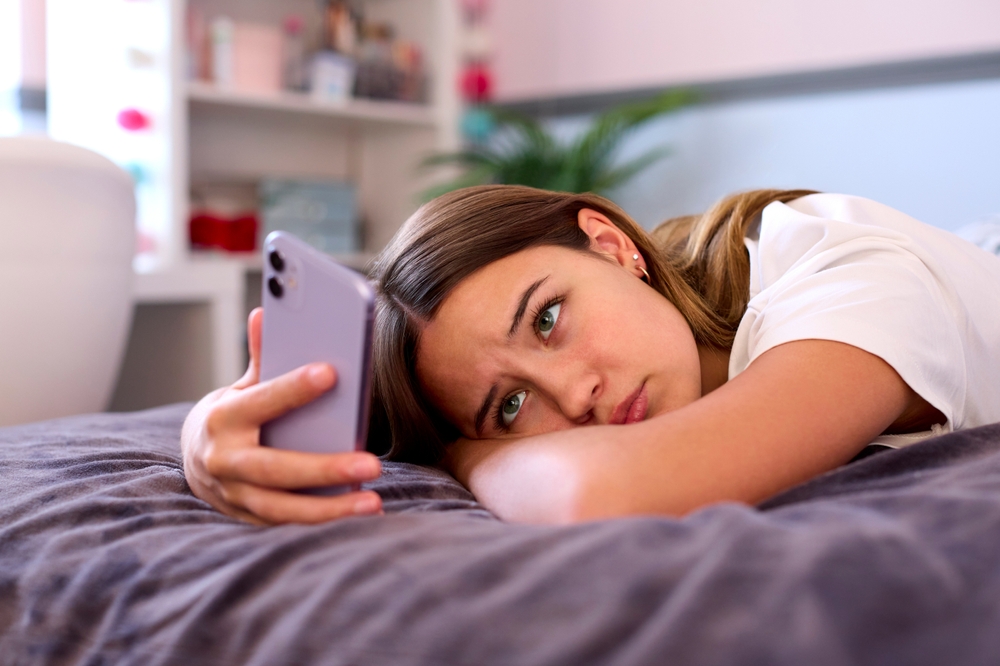
What Is Social Media Anxiety?
Social media anxiety is a type of stress or worry that’s linked to how we use and experience social media. It might show up as:
- Feeling nervous if you haven’t checked your phone
- Comparing yourself to others online
- Feeling left out when you see others having fun (aka FOMO, or “fear of missing out”)
- Worrying about how your posts are received
- Feeling overwhelmed by bad news or too much information
Over time, these feelings can build up and contribute to ongoing anxiety.
How Much Time Are We Spending on Social Media?
The average person spends almost 2 hours a day on social media [1]. That adds up to more than 700 hours a year—nearly a full month!
Many people also check multiple platforms. Facebook to stay in touch with family. Instagram to follow influencers. TikTok or YouTube for entertainment. LinkedIn for work. Pinterest for home ideas. It’s no wonder our minds feel so busy.
But here’s the thing: more isn’t always better. More scrolling can lead to more stress, especially if it cuts into sleep, work, or time with loved ones.
What Does the Research Say?
Studies show that too much time on social media is linked with:
- Higher levels of anxiety and depression [2]
- Lower self-esteem [3]
- Greater feelings of loneliness [4]
A study from the University of Pennsylvania found that college students who limited their social media use to 30 minutes a day felt less lonely and less depressed after just three weeks [5].
That’s a powerful reminder: how we use social media matters. It’s not all bad—but it’s also not always good.
Why Social Media Triggers Anxiety
Social media isn’t just about staying connected. It also plays with our emotions in ways we don’t always notice. Here’s how:
1. Comparison Trap
People often post their best moments online—vacations, promotions, happy families. We rarely see the hard days. When you compare your everyday life to someone else’s highlight reel, it’s easy to feel like you’re not measuring up.
2. FOMO (Fear of Missing Out)
When you see others hanging out without you, going to events, or having experiences you’re not part of, it can trigger a deep sense of exclusion—even if it’s not personal.
3. Likes and Comments = Validation?
Getting lots of likes or positive comments can feel great. But it can also make you crave approval from others. If a post doesn’t perform well, it might affect your self-worth.
4. Information Overload
Social media feeds are filled with news, opinions, updates, and more. This constant flow can be overwhelming and leave you feeling anxious, angry, or drained.
Is It Really Addiction?
In some cases, social media can start to look a lot like addiction. You might notice:
- You feel uneasy when you can’t check your phone.
- You interrupt conversations to check notifications.
- You spend hours scrolling, even when you don’t mean to.
- You feel a strong urge to post or check for likes.
Researchers are studying whether this behavior should be considered a form of behavioral addiction [6]. Even if it’s not labeled that way yet, the impacts on mental health are real.
How Social Media Can Affect Your Body
It’s not just your mind—social media use can take a toll on your body too.
Spending hours on your phone or computer can lead to:
- Neck and shoulder pain
- Eye strain
- Poor posture and back problems
- Less sleep (especially if you’re scrolling before bed)
- Less physical activity, which increases the risk of health problems like heart disease and obesity
One study even linked high internet use with an increased risk for depression and reduced sleep quality [7].
Signs Social Media Might Be Hurting Your Mental Health
Here are some warning signs that it might be time to rethink your social media habits:
- You feel more anxious, irritable, or sad after using social media.
- You spend more time online than intended.
- You notice a loss of interest in offline activities.
- You sleep less or feel more distracted during the day.
- You’ve started avoiding real-life relationships or feel disconnected.
If this sounds familiar, don’t panic. There are steps you can take to feel better—and more in control.
7 Simple Ways to Use Social Media More Mindfully
You don’t have to quit cold turkey. In fact, social media can be fun and even helpful when used in healthy ways. Try these simple tips:
1. Track Your Usage
Most phones can show you how much time you spend on each app. On iPhones, go to Settings > Screen Time to check.
2. Set Limits
Try using social media for 30–60 minutes a day. You can even set timers in your phone settings.
3. Turn Off Notifications
This helps cut down on distractions and the urge to check your phone every few minutes.
4. Unfollow or Mute
Follow accounts that uplift you. Unfollow or mute those that cause stress or comparison.
5. Delete the Apps (Temporarily or Permanently)
If you need a break, delete apps from your phone. You can always reinstall them later.
6. Schedule Social Media-Free Time
Pick one day a week—or even just an evening—to go without social media. Use that time for something you enjoy offline.
7. Be Present
When spending time with others, put your phone away. Look up. Make eye contact. Real-life connection is powerful.
When to Get Help
If you’re feeling anxious, down, or overwhelmed—and it’s not going away—consider reaching out to a mental health professional. You don’t have to figure it out alone.
Therapists can help you understand the root of your anxiety and create a plan that works for you. Sometimes, talking to someone is the best step toward healing.
At Mind Body Seven, we’re here to support your whole self—mind, body, and spirit. Our team is trained in helping people manage anxiety, improve their relationships, and find balance in today’s busy world.
Final Thoughts
Social media isn’t all bad—but it can become too much. If your time online is leaving you anxious or drained, it might be time to take a step back.
Try one or two of the tips above. Be kind to yourself. And remember, the real world is happening right in front of you—not just on a screen.
Reducing Social Media Anxiety: A Simple Guide:
https://acrobat.adobe.com/id/urn:aaid:sc:AP:d4da32ba-f6f5-45e2-9d8d-76fb39f381a3
Other Resources:
- Ariefdjohan, M., Reid, D., & Fritsch, S. (2025). Youth Digital Dilemmas: Exploring the Intersection Between Social Media and Anxiety. Pediatric Clinics of North America, 72(2), 317–331. https://doi.org/10.1016/j.pcl.2024.09.006
- UC Davis Health. (2024, May). Social media’s impact on our mental health and tips to use it safely. Cultivating Health Blog. https://health.ucdavis.edu/blog/cultivating-health/social-medias-impact-our-mental-health-and-tips-to-use-it-safely/2024/05
- McLean Hospital. (n.d.). Like it or not, social media’s affecting your mental health. https://www.mcleanhospital.org/essential/it-or-not-social-medias-affecting-your-mental-health
References
- Statista. (2023). Daily time spent on social networking by internet users worldwide from 2012 to 2023. https://www.statista.com/statistics/433871/daily-social-media-usage-worldwide/
- Vannucci, A., Flannery, K. M., & Ohannessian, C. M. (2017). Social media use and anxiety in emerging adults. Journal of Affective Disorders, 207, 163–166. https://doi.org/10.1016/j.jad.2016.08.040
- Appel, H., Gerlach, A. L., & Crusius, J. (2016). The interplay between Facebook use, social comparison, envy, and depression. Current Opinion in Psychology, 9, 44–49. https://doi.org/10.1016/j.copsyc.2015.10.006
- Primack, B. A., Shensa, A., Sidani, J. E., et al. (2017). Social media use and perceived social isolation among young adults in the U.S. American Journal of Preventive Medicine, 53(1), 1–8. https://doi.org/10.1016/j.amepre.2017.01.010
- Hunt, M. G., Marx, R., Lipson, C., & Young, J. (2018). No more FOMO: Limiting social media decreases loneliness and depression. Journal of Social and Clinical Psychology, 37(10), 751–768. https://doi.org/10.1521/jscp.2018.37.10.751
- Andreassen, C. S., Pallesen, S., & Griffiths, M. D. (2017). The relationship between addictive use of social media, narcissism, and self-esteem: Findings from a large national survey. Addictive Behaviors, 64, 287–293. https://doi.org/10.1016/j.addbeh.2016.03.006
- Alimoradi, Z., et al. (2019). Sleep problems during COVID-19 pandemic and its’ association to social media exposure: A systematic review and meta-analysis. Sleep Medicine, 79, 91–104. https://doi.org/10.1016/j.sleep.2021.01.019


A Message From Dr. Lewis If you’ve been struggling with depression or anxiety, I want you to know something important:

The Conversation That Surprised Me A few years ago, I had a patient named Greg who’d been on escitalopram (Lexapro)

The link between yoga and mental health has become sufficiently well established as to be practically mainstream. What was associated

You’re Not Meant to Go Through Life Alone In our increasingly connected yet often isolating world, you might sometimes feel