
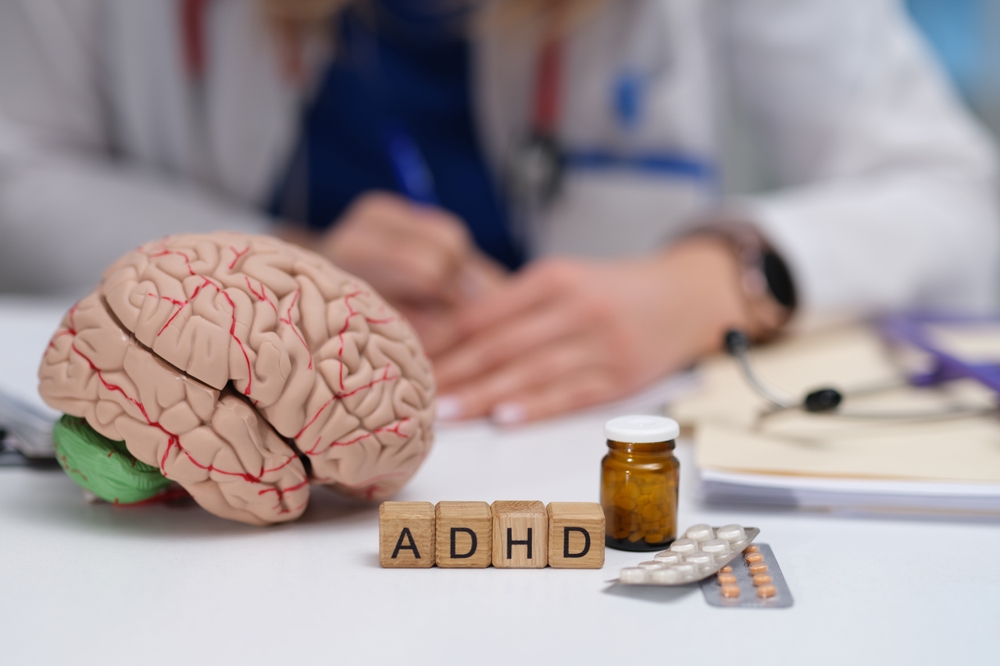

The numbers tell a striking story. In childhood, boys are diagnosed with ADHD at roughly two to three times the rate of girls. By adulthood, that ratio is nearly equal [1, 2]. This is not because girls grow into ADHD while boys grow out of it. It is because a generation of girls were missed the first time around and are finally being recognized as women [3].
And it is not just women. High-achieving adults of all genders, people with predominantly inattentive presentations, older adults who grew up before ADHD was a recognized condition, and anyone whose symptoms were successfully masked by intelligence, effort, or supportive environments can reach middle age without ever receiving an accurate diagnosis. Over half of all adults with a current ADHD diagnosis received it for the first time in adulthood [4].
Understanding why so many adults get missed is not just an academic exercise. It is the first step toward ensuring that people who are struggling get the right help, rather than continuing to blame themselves for difficulties that have a biological explanation.
The Gender Gap: How Women Fall Through the Cracks
The history of ADHD research is, to a significant degree, the history of studying hyperactive boys. The foundational studies that shaped our diagnostic criteria, clinical training, and cultural understanding of ADHD were conducted predominantly on male subjects who presented with disruptive, externalized behavior [5, 6]. Girls were systematically underrepresented in the research that defined what clinicians were trained to look for.
This matters because ADHD often looks different in girls and women. While the core neurobiology is the same, the behavioral presentation frequently diverges. Girls with ADHD are more likely to present with predominantly inattentive symptoms: daydreaming, disorganization, forgetfulness, and difficulty sustaining attention, rather than the hyperactive, impulsive, “bouncing off the walls” presentation that teachers and parents are primed to recognize [5, 7]. When hyperactivity is present, it may manifest as talkativeness, emotional reactivity, or internal restlessness rather than physical movement.
Girls with ADHD also tend to develop compensatory strategies earlier and more effectively than boys, working harder to maintain academic performance and social relationships even at significant personal cost. They may internalize their difficulties, developing anxiety, depression, or perfectionistic patterns rather than the externalizing behavior that triggers referrals [5, 8]. The result is that their ADHD is often invisible to the people around them, or is misattributed to anxiety, personality, or simply “not trying hard enough.”
Research confirms this pattern. A systematic review found that only one in four adolescent girls with ADHD received medication, compared to three in four boys [3]. A meta-analysis comparing symptom severity in males and females found that while girls showed fewer hyperactive and impulsive symptoms, their functional impairment was comparable [7]. They were struggling just as much but in ways that clinicians and educators were less equipped to detect.
Between 2007 and 2016, ADHD diagnoses in adult women rose by 344%, compared to 264% for men [4]. This is not an epidemic. It is a diagnostic correction, and it is still ongoing.
The High-IQ Mask: When Intelligence Hides ADHD
Intelligence is one of the most effective masks for ADHD, and one of the reasons so many capable adults reach their 30s, 40s, or 50s before anyone considers the diagnosis. When you are smart enough to compensate for executive function deficits, you may never fail conspicuously enough to trigger concern. You complete the assignment, but at 2 AM the night before it was due. You hold down the job, but you are chronically anxious about being “found out.” You get the degree, but your transcript tells a story of inconsistency that puzzles everyone, including you.
Longitudinal research supports this observation. Studies of late-onset ADHD presentations have found that these individuals showed fewer childhood externalizing problems and higher IQ than those with classic persistent presentations [9]. Their intelligence served as a buffer, allowing them to develop workarounds that kept them functional until the demands of adult life, more complex jobs, parenthood, relationship maintenance, financial management, exceeded their compensatory capacity.
The emotional toll of this delayed recognition is significant. Many adults describe years of self-blame, shame about their inconsistency, strained relationships, and a persistent sense that they are not living up to their potential. Receiving a diagnosis, even in middle age, can be profoundly validating, offering an external explanation for patterns that the person has been internalizing as personal failure.
The Inattentive Subtype: The Quieter Face of ADHD
The predominantly inattentive presentation of ADHD (previously called ADD) remains the most underdiagnosed subtype in both children and adults [2]. Without the behavioral disruption of hyperactivity and impulsivity, inattentive symptoms are easy to miss, easy to dismiss, and easy to attribute to other causes.
In adults, the inattentive presentation often looks like chronic disorganization, difficulty managing time, losing track of conversations or tasks, missing details, struggling to finish projects, and a mental “fogginess” that fluctuates but never fully resolves. These symptoms are common enough in the general population that many people, and many clinicians, do not immediately connect them to a neurodevelopmental condition.
The challenge is compounded by the fact that many adults with inattentive ADHD develop sophisticated masking strategies. They may use extensive lists, alarms, and reminders. They may appear calm and organized on the outside while experiencing constant internal chaos. They may gravitate toward careers or lifestyles that work around their deficits rather than exposing them. None of these strategies are evidence against ADHD; in fact, the need for them can be a clinical clue.
What Gets Diagnosed Instead
When adult ADHD goes unrecognized, the secondary effects often get diagnosed and treated while the underlying condition remains invisible. The most common misdiagnoses and partial diagnoses include anxiety disorder (which frequently coexists with ADHD but may also be a consequence of years of compensating for unmanaged executive dysfunction), major depression (which can develop as a result of chronic underachievement and self-blame), and bipolar disorder (particularly when emotional dysregulation is prominent) [2, 8].
Women in particular may receive diagnoses of generalized anxiety, depression, or borderline personality features for years before anyone considers ADHD as the root cause [3, 6]. More than 53% of women with ADHD have at least one additional psychiatric condition, compared to about 14% of women without ADHD [3]. These comorbidities are real and deserve treatment, but addressing them without identifying the underlying ADHD is like treating a fever without looking for the infection.
The Path Forward: What to Do If This Sounds Like You
If you recognize yourself in what you have read here, the most important next step is a comprehensive evaluation by a clinician experienced with ADHD in adults. Not a quiz. Not a self-diagnosis. Not a 10-minute telehealth appointment. The evaluation process we described in the previous post, with its emphasis on clinical interview, developmental history, functional assessment, and differential diagnosis, is designed to catch exactly the kinds of presentations that have historically been missed [10].
Bring whatever records you have: old report cards, school evaluations, even childhood photos that might jog memories for a parent you can consult. Consider asking a partner, close friend, or family member to provide their perspective on your daily functioning, as outside observers often see patterns that are invisible to the person living them.
And know that a late diagnosis is not a late start. Understanding your brain is the foundation for everything that follows, and there is no age at which that understanding stops being valuable.
In the next post, Adult-Onset ADHD: What the Science Actually Says, we will tackle one of the most debated questions in psychiatry: can ADHD truly develop in adulthood, or are late-onset presentations always childhood cases that were missed?
* * *
| Key Takeaways 1. The childhood diagnostic gender ratio of 2 to 3:1 (boys to girls) narrows to nearly 1:1 in adulthood, reflecting decades of underdiagnosis in girls who are now being identified as women.2. Women with ADHD more commonly present with inattentive symptoms, internalizing patterns, and effective masking, making their condition less visible to clinicians trained on male presentations.3. High intelligence can mask ADHD for decades by enabling compensatory strategies that prevent conspicuous failure while creating chronic internal stress.4. The predominantly inattentive subtype remains the most underdiagnosed presentation in both genders.5. When ADHD goes undiagnosed, secondary conditions (anxiety, depression) are often treated while the underlying cause remains unaddressed. |
Frequently Asked Questions
Q: At what age can ADHD be diagnosed in adults?
A: ADHD can be diagnosed at any age. The DSM-5 requires that some symptoms were present before age 12, but it does not require a childhood diagnosis. Many adults, particularly women, are not identified until their 30s, 40s, or later, when life demands exceed their ability to compensate. Over half of adults with current ADHD diagnoses received them for the first time in adulthood.
Q: Why are women diagnosed with ADHD so much later than men?
A: Multiple factors contribute. Girls more commonly present with inattentive rather than hyperactive symptoms, which are less disruptive and less likely to prompt referrals. Girls develop compensatory strategies earlier and more effectively. Diagnostic criteria were historically developed based on male presentations. And clinicians may be more likely to attribute women’s symptoms to anxiety or depression rather than considering ADHD.
Q: Can you have ADHD if you did well in school?
A: Absolutely. Academic achievement does not rule out ADHD, particularly in high-IQ individuals who can compensate through intelligence and effort. Many adults with undiagnosed ADHD describe getting good grades but at enormous personal cost: pulling all-nighters, experiencing intense anxiety about performance, and feeling like they had to work twice as hard as everyone else. The pattern often breaks down when adult responsibilities exceed compensatory capacity.
Q: What does undiagnosed ADHD look like in adults?
A: Common patterns include chronic disorganization, difficulty meeting deadlines despite genuine effort, strained relationships due to forgetfulness or emotional reactivity, a persistent feeling of underachievement, career instability, financial difficulties, anxiety or depression that do not fully respond to standard treatment, and a sense that you are constantly struggling with things that seem to come easily to others.
Q: Is the increase in adult ADHD diagnoses evidence of overdiagnosis?
A: The available evidence suggests the opposite: that the rise in adult diagnoses reflects improved recognition of a previously underdiagnosed condition, particularly in women and those with inattentive presentations. Population-based studies have not found a significant increase in ADHD prevalence over time. What has changed is awareness, clinical training, and willingness to evaluate adults for a condition that was long considered exclusively a childhood disorder.
| Medical Disclaimer This article is for informational and educational purposes only and is not a substitute for professional medical advice, diagnosis, or treatment. If you think you may have ADHD or any other medical condition, please consult a qualified healthcare provider. |
References
- Cortese S, Bellgrove MA, Brikell I, et al. Attention-deficit/hyperactivity disorder (ADHD) in adults: evidence base, uncertainties and controversies. World Psychiatry. 2025;24(3):347-371. doi:10.1002/wps.21374
- Faraone SV, Bellgrove MA, Brikell I, et al. Attention-deficit/hyperactivity disorder. Nature Reviews Disease Primers. 2024;10:11. doi:10.1038/s41572-024-00495-0
- Almekhlafi K, Jain S. Unveiling gender disparities in ADHD: a literature review on factors and impacts of late diagnosis in females (2010-2023). Journal of Women’s Mental Health. 2024;1(1):9-21.
- Staley BS, et al. Attention-deficit/hyperactivity disorder diagnosis, treatment, and telehealth use in adults. MMWR Morbidity and Mortality Weekly Report. 2024;73.
- Quinn PO, Madhoo M. A review of attention-deficit/hyperactivity disorder in women and girls: uncovering this hidden diagnosis. The Primary Care Companion for CNS Disorders. 2014;16(3):PCC.13r01596. doi:10.4088/PCC.13r01596
- Young S. Gender differences in ADHD and their clinical implications. Psychiatric Times. 2025;42(11).
- Young S, Adamo N, Asgeirsdottir BB, et al. A systematic review and meta-analysis comparing the severity of core symptoms of attention-deficit hyperactivity disorder in females and males. Psychological Medicine. 2024;54(15):3897-3911. doi:10.1017/S0033291724002344
- Hinshaw SP, Nguyen PT, O’Grady SM, Rosenthal EA. Annual research review: attention-deficit/hyperactivity disorder in girls and women: underrepresentation, longitudinal processes, and key directions. Journal of Child Psychology and Psychiatry. 2022;63(4):484-496. doi:10.1111/jcpp.13480
- Agnew-Blais JC, Polanczyk GV, Danese A, et al. Evaluation of the persistence, remission, and emergence of attention-deficit/hyperactivity disorder in young adulthood. JAMA Psychiatry. 2016;73(7):713-720. doi:10.1001/jamapsychiatry.2016.0465
- Olagunju AE, Ghoddusi F. Attention-deficit/hyperactivity disorder in adults. American Family Physician. 2024;110(2):157-166.
The information provided on this blog is for educational and informational purposes only. It is not intended to be a substitute for professional medical advice, diagnosis, or treatment. Always seek the advice of your physician or other qualified health provider with any questions you may have regarding a medical condition.


A Message From Dr. Lewis If you’ve been struggling with depression or anxiety, I want you to know something important:

The Conversation That Surprised Me A few years ago, I had a patient named Greg who’d been on escitalopram (Lexapro)


You’re Not Meant to Go Through Life Alone In our increasingly connected yet often isolating world, you might sometimes feel