
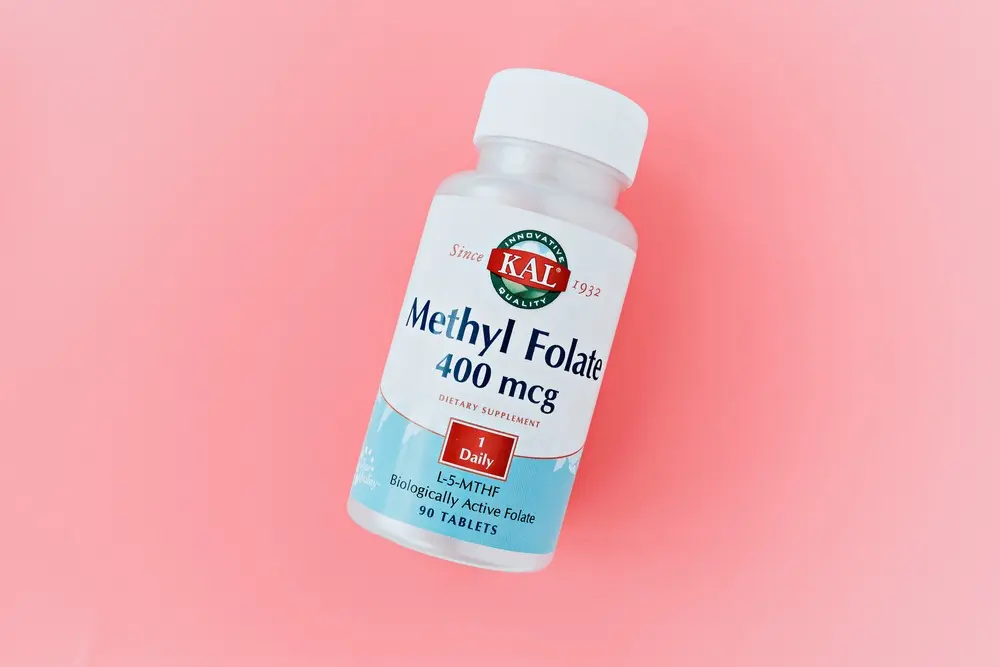

Methylfolate (L-methylfolate) is the active form of folate, also known as vitamin B9. Your body doesn’t need to convert it or “activate” it the way it does with folic acid. It’s ready to use right away.
This matters because methylfolate helps your brain produce key neurotransmitters that affect your mood and energy. Many people with depression struggle with low levels of these brain chemicals, and methylfolate plays a direct role in supporting their production.
Key roles of methylfolate:
Helps your brain make serotonin, dopamine, and norepinephrine
Supports the methylation cycle, which affects mood, energy, and nervous system health
Helps reduce high homocysteine levels, which have been linked to depression
Many people think of methylfolate as a gentle “biochemical support” that helps antidepressants work better — though the evidence is strongest for its use alongside an antidepressant, not on its own.
Why Methylfolate Matters for Depression
Not everyone responds well to standard antidepressants. There are many possible reasons. One that researchers have studied is low folate status or difficulty converting folate into its active form.
When your body can’t make enough methylfolate, the brain may struggle to produce and regulate neurotransmitters. This can contribute to:
Low mood
Poor stress tolerance
Low motivation
Slower response to antidepressants
Adding methylfolate can help “complete the pathway” your brain needs to make mood-supporting chemicals.
The MTHFR Gene and Who Needs Methylfolate
Variations in the MTHFR gene are common in the general population. This gene controls the enzyme that turns folate into methylfolate.
If that enzyme runs “slower” than normal, your brain may not get enough methylfolate — even if your diet is good or you take folic acid.
Researchers have studied whether this is linked to:
Higher risk of depression
Poorer response to antidepressants
Higher homocysteine levels
Lower neurotransmitter production
Genetic testing for MTHFR is not recommended routinely by the American College of Medical Genetics and Genomics, and a variant is not a diagnosis. Clinicians focus on symptoms, treatment response and, when relevant, blood folate, B12 and homocysteine levels.
What the Research Shows
The research on methylfolate is still limited. The main evidence comes from two randomized trials (Papakostas et al., 2012) in people who had not responded well to an SSRI: adding 7.5 mg/day did not beat placebo, while adding 15 mg/day improved outcomes in one trial. L-methylfolate is sold as a prescription medical food, not as an FDA-approved antidepressant.
Key findings from research:
In one positive trial, adding 15 mg/day to an antidepressant increased response rates
No trial has shown that it makes antidepressants work faster
The 7.5 mg/day dose did not outperform placebo
Larger, independent trials are still needed
Methylfolate was generally well tolerated in these short trials, but long-term data are limited.
Can Methylfolate Work on Its Own?
There is no good evidence for this.
No randomized trial supports methylfolate as a standalone treatment for depression. Clinicians sometimes check for, and treat, contributing factors such as:
MTHFR variations
Low folate or low B-vitamin status
Chronic inflammation
High homocysteine levels
It is not a replacement for antidepressants or therapy, and any change to your treatment should be made with your prescriber.
Who Benefits Most from Methylfolate?
Not everyone needs methylfolate. Small secondary analyses have explored whether some groups respond better, but these findings are preliminary.
You may benefit more if you have:
Elevated inflammation
People with higher CRP or other inflammatory markers may respond better to methylfolate in early analyses because inflammation can disrupt folate metabolism and neurotransmitter production.
Metabolic issues
Conditions like obesity or metabolic syndrome are linked to lower active folate levels. Methylfolate may help bypass this bottleneck.
MTHFR gene variations
If your body struggles to convert folate into methylfolate, direct supplementation has been proposed as a workaround, though evidence that the variant itself predicts response is weak.
Treatment-resistant depression
Those who didn’t improve with one or more antidepressants were the group studied in the add-on trials, with mixed results.
These patterns don’t guarantee a response, but they offer helpful clues when deciding whether to try supplementation.
The Functional Medicine Perspective
Functional medicine looks at why depression develops — not just the symptoms. Methylfolate fits into this approach because it supports several biochemical processes that influence mood.
Here’s how this model explains the link:
1. Nutrient Deficiencies
Low folate is one of the most common nutrient gaps seen in people with depression.
Possible reasons include:
Low intake of leafy greens and other folate-rich foods
Gut inflammation affecting absorption
Medications (like oral contraceptives) that deplete folate
Alcohol use
Genetic limitations in folate metabolism
2. Methylation Support
Methylation is a core biochemical pathway that influences:
Neurotransmitter production
Hormone balance
Detoxification
Gene expression
Immune regulation
Methylfolate is one of the main nutrients that keeps this cycle running smoothly.
3. Inflammation Reduction
Depression isn’t always “chemical imbalance.” For some people, inflammation may play a role. Methylfolate is thought to support anti-inflammatory pathways by helping produce SAMe and lowering homocysteine.
Functional medicine uses methylfolate not as a quick fix, but as a way to strengthen core systems that support emotional and physical resilience.
How Methylfolate Helps on a Root-Cause Level
Methylfolate does more than boost neurotransmitters. It influences several deeper pathways connected to mood and well-being.
Supports neurotransmitter production
Serotonin, dopamine, and norepinephrine all rely on methylfolate. If methylfolate is low, these pathways slow down — and mood often follows.
Helps balance methylation
Healthy methylation supports:
Energy levels
Focus
Stress resilience
Better detoxification
Hormone balance
Lowers homocysteine
High homocysteine is linked to:
Depression
Cardiovascular risk
Cognitive decline
Inflammation
Methylfolate helps convert homocysteine back into methionine, reducing this strain on the body.
Supports brain inflammation regulation
Inflammation can disrupt brain signaling and mood. By supporting SAMe and methylation pathways, methylfolate may help calm this inflammatory response.
Why Antidepressants May Not Work Until You Add Methylfolate
For some patients, antidepressants aren’t enough on their own because the biochemical pathways that produce neurotransmitters are already under strain.
Signs this may be happening:
slow or partial response to antidepressants
multiple failed antidepressant trials
chronic inflammation
high homocysteine
low folate status
MTHFR variations
In these cases, antidepressants may be “pushing” a pathway that doesn’t have enough raw materials to function well. Methylfolate helps restore the foundation so medications can work more effectively.
This is why several studies show that adding 15 mg/day of L-methylfolate can nearly double the likelihood of improvement in treatment-resistant depression.
How to Start Methylfolate Safely
Methylfolate affects brain chemistry, so starting thoughtfully helps ensure the best experience.
Start with medical guidance
Talk with your clinician before adding methylfolate — especially if you’re already taking antidepressants or other medications.
A clinician can help you:
confirm whether methylfolate makes sense for your symptoms
order helpful labs (folate, B12, homocysteine, and other tests your clinician considers relevant)
recommend a dose and timing
monitor how you respond and adjust as needed
Start low if you’re sensitive
Some people respond strongly to methylfolate, especially those with anxiety or nervous system sensitivity.
Starting low helps prevent overstimulation.
How dosing is set:
Your clinician chooses the starting dose, based on your health and medications
and adjusts it based on your response
Go slowly and report any changes to your clinician
Most clinicians recommend waiting 1–2 weeks between dose increases.
Understanding Dosing (What Most People Actually Take)
The dose used in research for depression is higher than typical supplement doses.
Research-supported dosing
7.5 mg/day (lower therapeutic dose)
15 mg/day (most evidence-based dose used in clinical trials)
These doses cannot be met with standard multivitamins — they’re much higher.
Why dosing matters
Low doses may support general health, but the one positive depression trial used 15 mg/day, alongside an antidepressant.
Your dose depends on:
sensitivity to supplements
your other medications
inflammation levels
how your body reacts in the first 2–4 weeks
whether you’re taking antidepressants
A clinician helps tailor dosing so you feel supported without feeling overstimulated.
How to Choose a High-Quality Methylfolate Supplement
Not all folate supplements are equal. Some use forms that don’t convert well in the body.
Look for clear labeling
Choose products labeled as:
L-methylfolate
L-5-MTHF
6(S)-5-methyltetrahydrofolate
Avoid supplements labeled only as:
folic acid
folate
5-MTHF without the “L” designation (can indicate a mix of active and inactive forms)
What else to look for
third-party testing (for purity and potency)
minimal fillers or additives
pharmaceutical-grade options, if recommended
Tracking Your Progress (What to Watch For)
Methylfolate works behind the scenes. Most improvements build gradually.
Keep an eye on:
mood steadiness
energy and motivation
stress tolerance
focus and concentration
anxiety levels
sleep quality
When you might see changes
Early shifts: 2–4 weeks
Clear improvements: 6–12 weeks
Best results: 3 months and beyond (especially for inflammation-related depression)
Helpful tracking tools
simple mood journal
rating mood 1–10 each day
weekly energy check-ins
notes about sleep, stress, or irritability
Your clinician can use this data to adjust your dose or timing.
Complementary Nutrients That Help Methylfolate Work Better
Methylfolate is part of a bigger nutritional network. If the supporting nutrients are low, results may be slower.
Key nutrients that work alongside methylfolate
Vitamin B12 (methylcobalamin) — essential for methylation
Vitamin B6 (P5P) — needed for neurotransmitter conversion
Magnesium — supports nervous system balance
Zinc — involved in neurotransmitter and methylation pathways
Riboflavin (B2) — especially helpful for MTHFR variations
These aren’t required for everyone, but low levels can limit the benefits of methylfolate.
Potential Side Effects (and What They Mean)
Most people tolerate methylfolate well, but some notice temporary symptoms — especially at higher doses.
Possible side effects
increased anxiety or restlessness
irritability
headaches
nausea
trouble sleeping
These usually improve when:
the dose is reduced
the supplement is taken earlier in the day
supporting nutrients are added
Important cautions
Bipolar disorder: Methylfolate can sometimes increase activation — requires close clinical monitoring.
Cancer history: Folate plays a role in cell replication; discuss with your oncologist.
Medication interactions:
methotrexate
some anticonvulsants
If any symptoms feel intense, the dose is likely too high or increasing too quickly.
Potential Side Effects: What’s Normal and What’s Not
Methylfolate is usually well-tolerated, but some people feel too much stimulation when the dose is high or increased too quickly.
Normal, short-term effects may include:
mild irritability
restlessness or “wired” energy
headaches
digestive upset
feeling emotional or moody
difficulty falling asleep
These effects usually improve when:
the dose is lowered
support nutrients (B12, magnesium, B6) are added
the supplement is taken earlier in the day
If symptoms feel intense, it often means:
the dose is higher than your nervous system can manage
the increase happened too quickly
inflammation or B12 deficiency needs to be addressed first
These aren’t signs the supplement is “bad for you,” just that your body needs a slower approach.
Important Precautions
Even though methylfolate is a nutrient, it still influences brain chemistry — so thoughtful monitoring matters.
Situations where you need closer supervision:
Bipolar disorder: May increase activation or cycling. Must be monitored.
History of mania or hypomania: Start extremely low and only with a clinician.
High anxiety sensitivity: Go slow; even 200–400 mcg may feel strong at first.
Postpartum hormonal shifts: Extra care around dosing is important.
Severe inflammation: Sometimes stabilizing inflammation first improves tolerance.
Medication interactions
Discuss methylfolate with your clinician if you take:
methotrexate
anticonvulsants
certain chemotherapy medications
very high-dose antidepressants
Interactions aren’t always dangerous, but they do require monitoring and dosing adjustments.
Who Should Avoid or Delay Methylfolate
Not everyone is ready to start methylfolate on day one. Sometimes waiting leads to better outcomes.
Consider delaying methylfolate if you currently have:
untreated B12 deficiency
significant untreated medical illness
extremely high stress levels and poor sleep
active alcohol misuse
severe nutrient depletion
an unclear diagnosis that still needs a full medical evaluation
Your system may need gentle stabilization before adding methylfolate so that it feels supportive instead of overwhelming.
When Methylfolate Alone Is Not Enough
Methylfolate can support mood — but it’s not a standalone cure for most people.
Situations where it works best as part of a bigger plan:
chronic stress and sleep disruption
trauma-related symptoms
nutrient deficiencies
chronic inflammation
thyroid or hormone imbalances
gut issues affecting absorption
Comprehensive care often provides better results, including:
therapy
anti-inflammatory nutrition
consistent sleep routines
exercise tailored to energy capacity
gut healing when needed
medication when appropriate
Methylfolate is one piece of the puzzle — not the entire picture.
The Bottom Line: Is Methylfolate Right for You?
Some people with depression may benefit from methylfolate as an add-on — mainly those who have had a partial response to an antidepressant.
You may be a good candidate if you have:
treatment-resistant depression
low energy or motivation
high inflammation markers
MTHFR variations
high homocysteine
symptoms that improve with nutritional support
You may need a slower or modified approach if you have:
anxiety that worsens easily
bipolar disorder
history of overstimulation with supplements
Signs methylfolate may be helping:
steadier mood
better motivation
improved focus
smoother stress response
fewer emotional “crashes”
Healing is gradual — most people notice clearer improvements over 6–12 weeks.
A Simple, Safe Plan to Begin
These steps summarize how we approach it in practice.
Step 1: Talk with your clinician
They’ll confirm whether methylfolate makes sense for your goals.
Step 2: Run targeted labs if needed
Helpful tests may include:
folate
B12
homocysteine
CRP (inflammation)
Step 3: Start low
Your clinician will:
choose a starting dose and increase it slowly if needed
keep in mind that the one positive trial used 15 mg/day alongside an antidepressant
Step 4: Support the whole system
Combine methylfolate with:
good sleep habits
nutrient-dense meals
steady movement
stress-regulation practices
therapy or counseling if appropriate
Step 5: Track small changes
Weekly notes help your clinician fine-tune your plan.
Moving Forward
Methylfolate may be a useful add-on option for people who haven’t found full relief with standard treatments. It supports the underlying biology that affects mood, energy, motivation, and stress response — though the research is still limited.
It’s not about replacing other treatments, but about giving your brain the raw materials it needs to work at its best. With thoughtful dosing, proper support, and a clinician who understands your unique chemistry, methylfolate can be one part of a holistic plan for depression. Check with your clinician before starting any supplement, especially if you take psychiatric medication, are pregnant or breastfeeding.
If you’re wondering whether methylfolate is right for you, a consultation is the best next step. You deserve care that looks deeper, listens closely, and honors your whole health — not just your symptoms.
The information provided on this blog is for educational and informational purposes only. It is not intended to be a substitute for professional medical advice, diagnosis, or treatment. Always seek the advice of your physician or other qualified health provider with any questions you may have regarding a medical condition.

Cited Research Articles
American Journal of Psychiatry. Study on the effectiveness of methylfolate in combination with antidepressants.
Papakostas GI, et al. (2012). L-methylfolate as adjunctive therapy for SSRI-resistant major depression: results of two randomized, double-blind, parallel-sequential trials. American Journal of Psychiatry, 169(12), 1267-1274.
NCBI – Genetic Factors in Depression. Impact of MTHFR gene mutation on folate conversion.
Shelton RC, et al. (2015). Assessing effects of l-methylfolate in depression management: results of a real-world patient experience trial. The Primary Care Companion for CNS Disorders, 17(1).
Zajecka JM, et al. (2016). Long-term efficacy, safety, and tolerability of L-methylfolate calcium in patients with MDD who reported inadequate response to antidepressant therapy: results from an open-label study. Innovations in Clinical Neuroscience, 13(3-4), 46-53.
Psychiatric Times. Guidelines for incorporating supplements into mental health treatment.
Nutrition Reviews. Evaluating the quality of methylfolate supplements.
Journal of Psychiatric Research. Timeframe for observing the effects of methylfolate supplementation.
Holistic Psychiatry. Comprehensive approaches to treating depression.
Fava M, et al. (2017). Baseline biomarkers and response to L-methylfolate (15 mg) as adjunctive therapy for SSRI-resistant major depressive disorder: results of a clinical trial. Journal of Clinical Psychiatry, 78(8), e1012-e1018.
Systematic Review and Meta-Analysis of L-Methylfolate Augmentation in Depressive Disorders.
Maruf AA, Poweleit EA, Brown LC, Strawn JR, Bousman CA.
Pharmacopsychiatry. 2022;55(3):139-147. doi:10.1055/a-1681-2047.
Papakostas GI, Shelton RC, Zajecka JM, et al.
The American Journal of Psychiatry. 2012;169(12):1267-74. doi:10.1176/appi.ajp.2012.11071114.
Leading Journal
Zajecka JM, Fava M, Shelton RC, et al.
The Journal of Clinical Psychiatry. 2016;77(5):654-60. doi:10.4088/JCP.15m10181.
Shelton RC, Pencina MJ, Barrentine LW, et al.
The Journal of Clinical Psychiatry. 2015;76(12):1635-41. doi:10.4088/JCP.14m09587.
Papakostas GI, Shelton RC, Zajecka JM, et al.
The Journal of Clinical Psychiatry. 2014;75(8):855-63. doi:10.4088/JCP.13m08947.

A Message From Dr. Lewis If you’ve been struggling with depression or anxiety, I want you to know something important:

The Conversation That Surprised Me A few years ago, I had a patient named Greg who’d been on escitalopram (Lexapro)


You’re Not Meant to Go Through Life Alone In our increasingly connected yet often isolating world, you might sometimes feel