
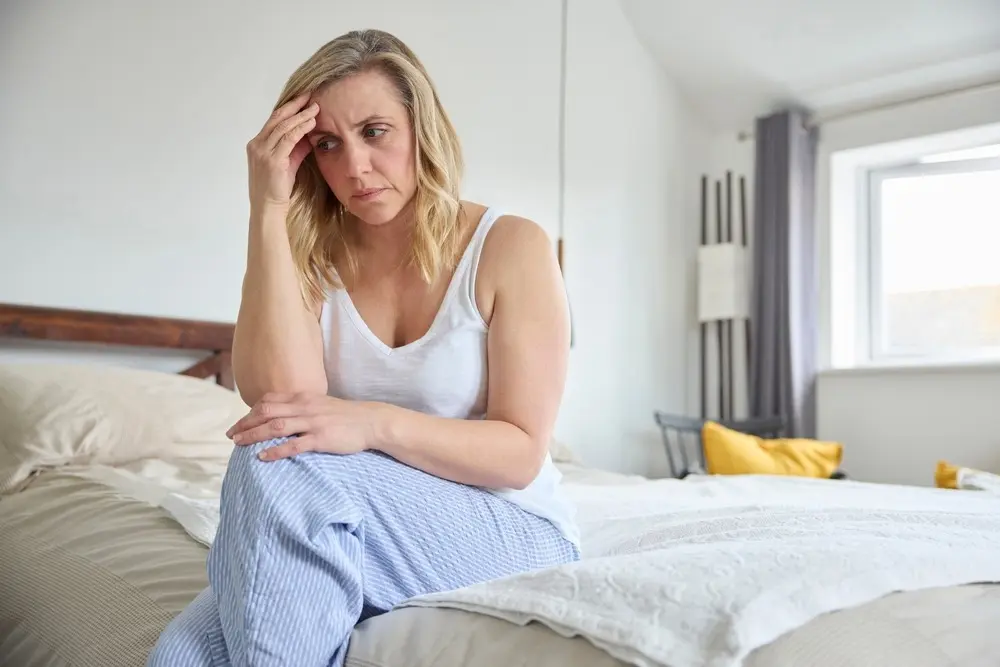
Navigating the Storm: Understanding Perimenopause and Mental Health

Perimenopause can feel unpredictable. Hormones rise and fall, symptoms come and go, and the ground beneath you shifts in ways that don’t always make sense. This transition can last several years before menopause officially begins, and it affects far more than monthly cycles.
Mental and emotional changes are just as real — and just as important — as the physical ones.
This updated version breaks things down simply, so you can understand why your mood may feel different during this period and what support can make a meaningful difference.
The Perimenopausal Transition: More Than Physical Changes
Perimenopause usually begins in the 40s, but it can start earlier or later. It ends after twelve months without a menstrual period. Although it’s often viewed as a reproductive milestone, it’s actually a major brain and hormone transition.
What’s Actually Changing?
Your ovaries produce less estrogen and progesterone, but the change isn’t a smooth decline — it’s up and down. These shifts affect several brain systems involved in mood, sleep, energy, and focus.
Here’s how:
Estrogen influences serotonin, dopamine, and norepinephrine — key mood and motivation chemicals.
Progesterone has naturally calming effects.
Cortisol patterns can shift, making stress feel harder to manage.
Researchers often describe perimenopause as a window of vulnerability for mood symptoms, especially for women already sensitive to hormone changes.
How Perimenopause Can Affect Mental Health
Hormonal fluctuations can make you feel unlike yourself. For some women, this transition brings the first mood symptoms they’ve ever experienced. For others, old patterns resurface.
What the Research Shows
Studies consistently show that women are 2–4 times more likely to experience depression during perimenopause compared to earlier life stages.
Women with a history of depression are at even higher risk. Hormone swings can re-activate symptoms that were previously stable.
Common Mental Health Changes
Perimenopause can affect both mood and cognition. Many women notice:
Mood Symptoms
New or worsening depression
Irritability or emotional reactivity
Increased sensitivity to stress
Anxiety Symptoms
Heightened worry
Panic symptoms
Social anxiety
Cognitive Changes
Often called “brain fog”:
Trouble concentrating
Memory lapses
Slower processing
Sleep Disturbances
Trouble falling or staying asleep
Night sweats disrupting rest
Waking up feeling unrested
When sleep suffers, mood almost always follows.
The Vasomotor Connection (Hot Flashes + Mood)
Hot flashes and night sweats aren’t just uncomfortable — they can affect mental health.
Women with more severe vasomotor symptoms are twice as likely to experience depression. Possible reasons include:
Sleep disruption
Hormone sensitivity
Inflammation
The emotional impact of unpredictable symptoms
Hot flashes are more than a nuisance; they can shape how your brain functions and how you feel day to day.
The Biopsychosocial Storm
Perimenopause often overlaps with major life responsibilities. That combination — hormones, stress, and external pressure — creates a perfect storm.
Biological Factors
Hormone fluctuations
Changes in neurotransmitter balance
Shifts in cortisol and stress response
Increased inflammation
Psychological Factors
History of anxiety or depression
Coping style
Self-expectations and pressure
Feelings about aging and identity
Social Factors
Caring for aging parents
Teen or adult children transitions
Work stress
Relationship changes
Lack of support or understanding
When all three layers stack up, symptoms intensify.
Evidence-Based Treatments in Conventional Medicine
Perimenopausal mood symptoms are real, treatable, and common. Several options have strong research support.
Hormone Therapy (HT)
For women with clear hormonal symptoms (hot flashes, sleep issues, mood swings), hormone therapy can help regulate both physical and emotional changes.
Many women notice:
Fewer hot flashes
Better sleep
Stabilized mood
Antidepressants (SSRIs/SNRIs)
These can be effective for:
Depression
Anxiety
Mood instability
Hot flashes (certain medications help both mood and vasomotor symptoms)
Other Medications
Depending on symptoms:
Gabapentin for anxiety + hot flashes
Low-dose antipsychotics for severe mood dysregulation
Sleep medications when short-term support is needed
Psychotherapy
CBT, ACT, and trauma-informed approaches can help with:
Mood regulation
Coping strategies
Stress reduction
Sleep improvement
Functional Medicine Approaches
Functional psychiatry looks deeper at the biological systems that influence mood during perimenopause.
Comprehensive Hormone Assessment
May include testing:
Estradiol and estrogen metabolites
Progesterone
Cortisol rhythm
Thyroid markers
DHEA and testosterone
Melatonin
This creates a full map of hormonal influences on mood and sleep.
Reducing Inflammation & Supporting Gut Health
Functional strategies may include:
Stool testing
Anti-inflammatory nutrition
Probiotics
Supporting the estrobolome (bacteria involved in estrogen metabolism)
Studies show that inflammation can make hormone changes harder to tolerate.
Key Nutrient Support
Common deficiencies during perimenopause:
B vitamins (for neurotransmitter production)
Magnesium (sleep, anxiety, stress response)
Vitamin D (mood regulation)
Omega-3s (anti-inflammatory support for the brain)
Supporting Neurotransmitter Balance
Functional treatment may include:
Amino acids (like tryptophan or tyrosine)
Methylation support
Adaptogens
Phytoestrogens
These approaches help steady mood when hormones fluctuate.
Lifestyle Changes That Make a Real Difference
These shifts are often as effective as medication — and sometimes more powerful when combined.
Movement
Aerobic exercise improves mood
Strength training protects bones and brain health
Yoga helps with anxiety, sleep, and hot flashes
Sleep Support
Consistent routines
Cooling strategies for night sweats
Dark, quiet, cool sleep settings
Limiting screens before bed
Stress Management
Mindfulness
Breathwork
Nature exposure
Cognitive reframing
Nutrition for Hormone Stability
Mediterranean-style patterns
High omega-3 intake
Steady blood sugar
Fewer inflammatory foods
Lower alcohol use
Supplements That May Help
Evidence varies, but many women find relief with the right formula and guidance.
May Reduce Symptoms
Black cohosh
Omega-3s
SAMe
Probiotics
Certain adaptogens
Use With Caution
St. John’s Wort (interacts with medications)
Supplements work best when tailored to symptoms, history, and lab findings.
Why Personalization Matters
Every woman’s experience is different. The most effective approach is the one built around your biology, history, and goals.
Changing the Narrative
Perimenopause doesn’t have to feel like a loss of control. With the right support, this phase can be a turning point — one that strengthens long-term mental and physical health.
You deserve care that acknowledges both the science and the lived experience of this transition. With the right tools, this storm becomes navigable — and sometimes even transformative.
The information provided on this blog is for educational and informational purposes only. It is not intended to be a substitute for professional medical advice, diagnosis, or treatment. Always seek the advice of your physician or other qualified health provider with any questions you may have regarding a medical condition.

Cited Research Articles
Maki PM, et al. (2019). Guidelines for the evaluation and treatment of perimenopausal depression. Menopause, 26(9), 1117-1125.
Gordon JL, et al. (2018). Estradiol variability, stressful life events, and the emergence of depressive symptomatology during the menopausal transition. Menopause, 23(3), 257-266.
Freeman EW, et al. (2014). Longitudinal pattern of depressive symptoms around natural menopause. JAMA Psychiatry, 71(1), 36-43.
Bromberger JT, et al. (2015). Does risk for anxiety increase during the menopausal transition? Menopause, 22(5), 488-495.
Joffe H, et al. (2016). Depression, anxiety, and vasomotor symptoms in a community sample of midlife women. Menopause, 23(10), 1102-1107.
North American Menopause Society. (2017). The 2017 hormone therapy position statement of The North American Menopause Society. Menopause, 24(7), 728-753.
Joffe H, de Wit A, Coborn J, et al.
The Journal of Clinical Endocrinology and Metabolism. 2020;105(3):dgz181. doi:10.1210/clinem/dgz181.
Gordon JL, Sander B.
Psychoneuroendocrinology. 2021;133:105418. doi:10.1016/j.psyneuen.2021.105418.
Willi J, Süss H, Grub J, Ehlert U.
Journal of Affective Disorders. 2020;277:603-611. doi:10.1016/j.jad.2020.08.062.
Leading Journal
McElhany K, Aggarwal S, Wood G, Beauchamp J.
Maturitas. 2024;190:108118. doi:10.1016/j.maturitas.2024.108118.
New Research
Promoting Good Mental Health Over the Menopause Transition.
Brown L, Hunter MS, Chen R, et al.
Lancet (London, England). 2024;403(10430):969-983. doi:10.1016/S0140-6736(23)02801-5.
Leading Journal
Horst K, Cirino N, Adams KE.
Current Opinion in Obstetrics & Gynecology. 2025;37(2):102-110. doi:10.1097/GCO.0000000000001014.
New Research
A Message From Dr. Lewis If you’ve been struggling with depression or anxiety, I want you to know something important:
The Conversation That Surprised Me A few years ago, I had a patient named Greg who’d been on escitalopram (Lexapro)


You’re Not Meant to Go Through Life Alone In our increasingly connected yet often isolating world, you might sometimes feel