
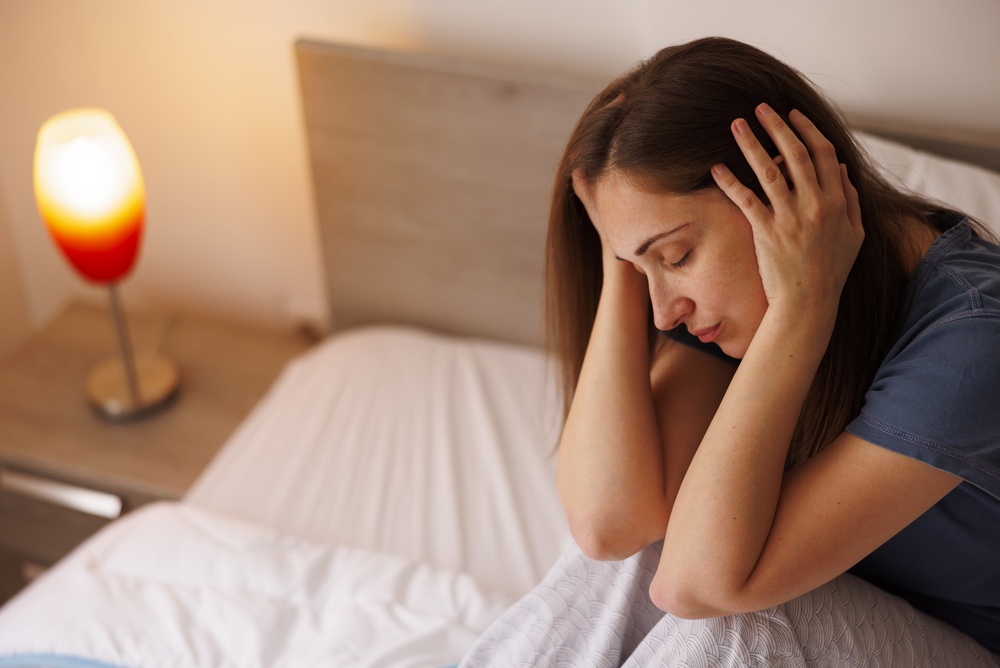

Thousands of women in their late 30s and 40s are diagnosed with anxiety disorder or adult ADHD each year — when what’s actually happening is perimenopause. This is one of the most significant diagnostic blind spots in women’s mental health. Understanding why hormonal transition so closely mimics these conditions is essential to getting the right help at the right time.
1. Estrogen Regulates Dopamine and Serotonin
Estrogen is not just a reproductive hormone — it is a neuromodulator that profoundly influences the activity of serotonin, dopamine, and norepinephrine. Serotonin receptors are estrogen-sensitive, meaning that as estrogen fluctuates in perimenopause, so does serotonin signaling — producing mood instability, anxiety, irritability, and depressive symptoms that look clinically identical to primary mood and anxiety disorders. Estrogen also upregulates dopamine activity in the prefrontal cortex — the brain region responsible for executive function, focus, working memory, and impulse control. As estrogen declines or fluctuates in perimenopause, dopamine activity drops, producing attention difficulties, impulsivity, difficulty organizing and following through on tasks, and cognitive inefficiency that meets diagnostic criteria for ADHD. Without hormonal testing in the clinical context, these presentations are routinely and incorrectly attributed to primary ADHD or anxiety disorders.
2. Sleep Deprivation Creates ADHD-Like Symptoms
Perimenopausal sleep disruption is nearly universal — and profoundly impairs cognitive function in ways that directly mimic ADHD. The prefrontal cortex, responsible for executive function, is extremely sensitive to sleep deprivation. Even one night of poor sleep measurably impairs attention, working memory, cognitive flexibility, and impulse control. The chronic sleep fragmentation of perimenopause — driven by night sweats, progesterone decline, and cortisol dysregulation — creates a persistent state of prefrontal cortex impairment that produces exactly the ADHD-like symptoms (distractibility, forgetfulness, difficulty sustaining focus, emotional dysregulation) that lead to misdiagnosis. When the sleep issue is addressed (often through progesterone supplementation or other hormonal support), the cognitive symptoms frequently resolve — confirming their hormonal rather than neurodevelopmental origin.
3. Cortisol Dysregulation
The HPA (hypothalamic-pituitary-adrenal) axis — the brain-body stress response system — is modulated by estrogen and progesterone. As these hormones fluctuate in perimenopause, the stress response system becomes dysregulated: cortisol may be too high in the evening (causing sleep disruption and anxiety), too low in the morning (causing fatigue and difficulty initiating the day), or simply more reactive to stressors than it used to be. This cortisol dysregulation produces persistent anxiety, hypervigilance, difficulty relaxing, physical tension, and a nervous system that is chronically activated — a presentation that is clinically indistinguishable from an anxiety disorder. The key difference: anxiety from HPA dysregulation doesn’t respond well to standard anti-anxiety medications, but does respond to cortisol-regulating interventions like adaptogens, sleep optimization, and hormonal support.
4. Progesterone Drop Causes Anxiety
Progesterone and its metabolite allopregnanolone are among the body’s most powerful natural anxiolytics. Allopregnanolone acts as a positive allosteric modulator of GABA-A receptors — essentially doing the same thing as benzodiazepines but naturally and physiologically. In the late luteal phase of the menstrual cycle, progesterone drops sharply, taking allopregnanolone with it — a phenomenon that underlies premenstrual dysphoric disorder (PMDD). In perimenopause, as cycles become increasingly anovulatory (no ovulation, no progesterone production), women experience a chronic low-progesterone state that produces persistent anxiety, insomnia, and emotional lability. This perimenopausal progesterone deficiency anxiety is physiologically distinct from primary anxiety disorders and requires a different treatment approach — specifically, progesterone supplementation rather than (or alongside) anxiolytics or SSRIs.
5. Brain Fog Mimics Attention Issues
Perimenopausal brain fog — difficulty retrieving words, slowed processing speed, impaired working memory, difficulty concentrating in conversations or meetings — can be frightening and professionally disruptive. Women describe feeling like they’ve ‘lost their mind’ and performing below their previous cognitive baseline in ways that affect their confidence and professional performance. This cognitive change reflects the real neurological impact of estrogen fluctuation on cerebral blood flow, glucose metabolism in the brain, and synaptic plasticity. Neuroimaging studies have documented decreased brain activity in perimenopausal women compared to premenopausal controls. These cognitive changes can easily satisfy ADHD diagnostic criteria — particularly inattentive type — when the hormonal context is not considered. An ADHD diagnosis without hormonal evaluation in a perimenopausal woman is an incomplete assessment.
6. Mood Lability Mimics Bipolar Disorder
The rapid mood oscillations of perimenopause — cycling between fine, tearful, anxious, enraged, and exhausted sometimes within a single day — can closely resemble bipolar disorder, PMDD, or borderline personality disorder to a clinician who is not considering the hormonal context. Women in perimenopause are sometimes misdiagnosed with cyclothymia or bipolar II disorder and placed on mood stabilizers that address the surface symptom without the underlying cause. The key distinguishing feature is the timing relative to the menstrual cycle and the hormonal context (age 38–52, subtle cycle changes, other physical symptoms). A careful symptom tracking diary linked to cycle phase can be remarkably revealing. Mood lability that is predominantly perimenstrual in a perimenopausal woman should always prompt hormonal evaluation before psychiatric diagnosis.
7. High Misdiagnosis Rates in Women
Women are diagnosed with anxiety disorders at twice the rate of men throughout adulthood, and the perimenopausal transition — with its constellation of anxiety, mood instability, and cognitive symptoms — is a significant contributor to this disparity. Studies have found that a substantial proportion of women seeking mental health care in their 40s have hormonally-driven symptoms, and that hormonal assessment is not standard practice in psychiatric evaluations despite the well-documented neuroactive effects of sex hormones. A survey of women with perimenopausal symptoms found that many saw multiple clinicians before receiving an accurate hormonal assessment. The solution is integrative psychiatric care that evaluates both the psychological and biological dimensions of mental health — including comprehensive hormonal assessment as a routine part of psychiatric evaluation for women in the relevant age range.
If you’re in your late 30s or 40s and experiencing anxiety or attention issues that seem to have come out of nowhere, please consider a comprehensive evaluation that includes hormonal assessment. At drlewis.com, I specialize in exactly this intersection of hormonal health and mental health. Brooklyn and telehealth available.
The information provided on this blog is for educational and informational purposes only. It is not intended to be a substitute for professional medical advice, diagnosis, or treatment. Always seek the advice of your physician or other qualified health provider with any questions you may have regarding a medical condition.

A Message From Dr. Lewis If you’ve been struggling with depression or anxiety, I want you to know something important:

The Conversation That Surprised Me A few years ago, I had a patient named Greg who’d been on escitalopram (Lexapro)


You’re Not Meant to Go Through Life Alone In our increasingly connected yet often isolating world, you might sometimes feel